We chose Apollo 13 because it is the best example of a real NASA mission where one small failure changed everything.
Apollo 13 - A Mission To The Moon
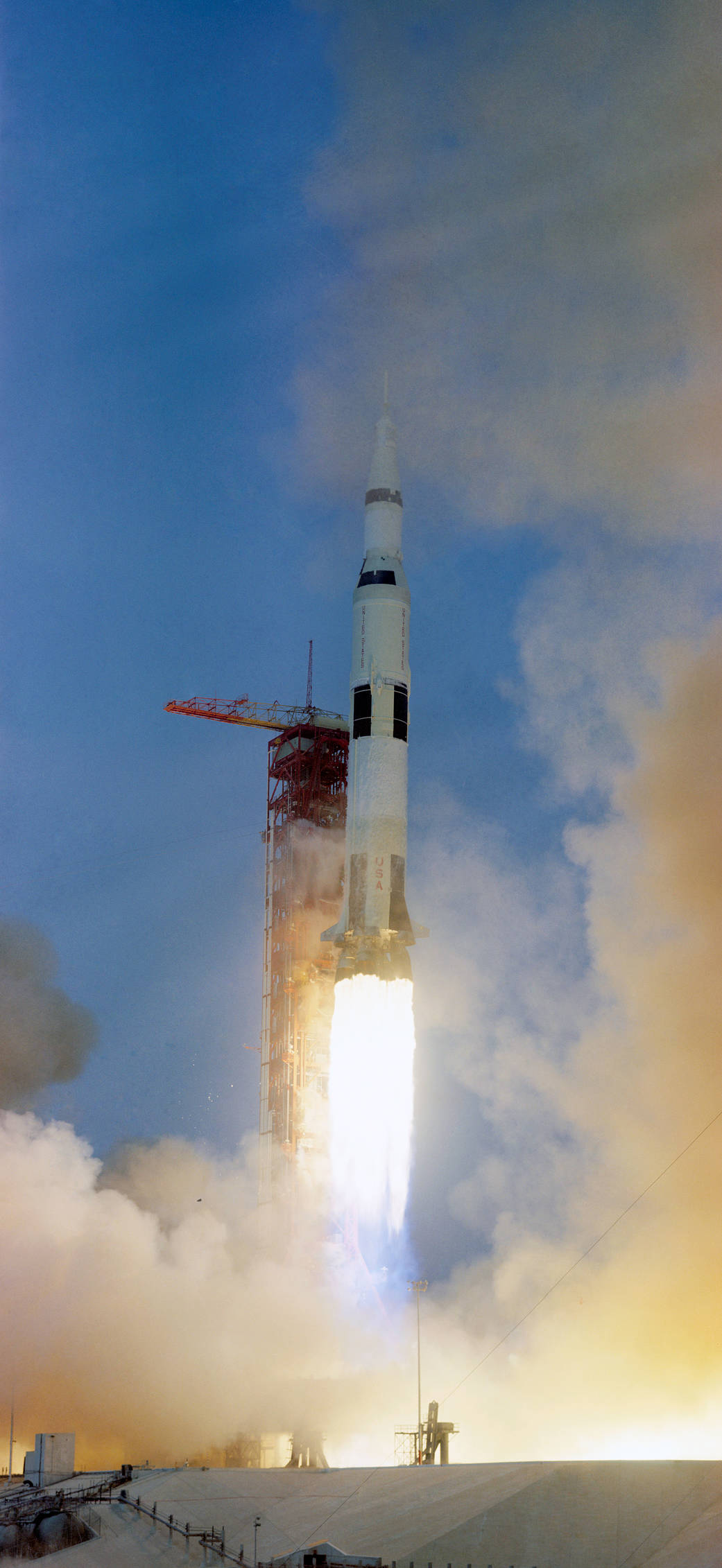
Apollo 13 launched on April 11, 1970. The goal was to land on the Moon for the third time. The crew was Jim Lovell, Jack Swigert, and Fred Haise.
The Explosion - April 13, 1970
 ⚠ CRITICAL FAILURE - O2 TANK 2
About 56 hours into the mission (55 hours 55 minutes), about 330,000 km (205,000 miles) from Earth, Oxygen Tank No. 2 in the Service Module exploded. The crew heard a loud bang and saw the oxygen and power dropping fast. They had to abort the Moon landing.
Why Did It Happen? Real Causes
Damaged Thermostat
The tank heater had thermostat switches that should cut it off at 80°F. During an eight-hour ground test in March 1970 they welded shut, and the wiring inside the tank reached about 1000°F in places.
Source: NASA NSSDCA and NASA History Office (see Sources).Damaged Insulation
The high heat damaged the Teflon insulation on the wires inside the tank. When the fan was turned on in space, it created a short circuit and fire.
Source: NASA History Office (see Sources).Hidden Damage
In 1968 the tank was dropped about 2 inches, slightly jarring a fill line inside it. The damage was not known, and the tank was later installed in Apollo 13. The loose line made the tank hard to empty on the ground, which led to the long heating.
Source: NASA History Office and NASA NSSDCA (see Sources).Apollo 13 facts are from NASA pages on the Apollo 13 Review Board report (links in Sources and credits below).
How They Survived - And Why We Chose It

The crew used the Lunar Module as a lifeboat. They had to save power, oxygen, water, and fix a CO2 filter with plastic bags and tape. Every decision mattered. This is exactly what our game teaches.
“We did not choose an easy game. We chose Apollo 13 because in real life, one wrong decision means you never come home.”
Turn it, zoom in and tap a number to see what each part does.
Real NASA launch vehicles. Tap a card to see what each one teaches us.
Four steps, from a blank page to a launch.
The budget problem
Every mission has a fixed budget and a science goal. Spend too much and the mission is cancelled. Spend too little and we cannot reach the goal.
The weight problem
A rocket can only lift so much. Every instrument, tank and solar panel adds mass, and more mass needs more fuel. Atlas lifted about 1.4 tonnes. Saturn V lifted about 140.
The parts problem
We choose the launch vehicle, engine, staging, power and instruments. Every part trades one thing for another: power for mass, science for cost.
Our solution
Start with the goal, pick the lightest rocket that can lift the load, add only parts that raise the science score, and keep a reserve.
- 1Read the budget and the science goal.
- 2Pick a launch vehicle that can lift the mass.
- 3Choose the engine and enough fuel.
- 4Add power and instruments that earn points.
- 5Watch the Mass and Cost bars and run Ship Check.
- 6Launch, then adapt when events happen.
Where our facts came from, what we took from each one, and what we used Claude for.
NASA JPL: Concept Maturity Levels
R. Wessen, C. Borden, J. Ziemer and J. Kwok, “Space Mission Concept Development Using Concept Maturity Levels”, Jet Propulsion Laboratory, California Institute of Technology, 2013.
What we used: the green, yellow and red checklist, the rule that a concept is at a level when 80% of its items are green, the CML 4 Point Design level, and the checklist targets of 35% power margin and 3 dB telecom margin.
NASA SmallSat Institute: Design and Develop Science Missions
Julie Levri, Access to Space for All webinar, March 26, 2025, www.nasa.gov/smallsat-institute.
What we used: the four mission segments (launch, space, ground and user), the six steps from need and goals to implement, and the advice to plan how each requirement will be verified before building.
NASA CubeSat Launch Initiative: CubeSat 101
“CubeSat 101: Basic Concepts and Processes for First-Time CubeSat Developers”, NASA, 2017.
What we used: the importance of battery safety, the orbital debris and disposal plan, the warning that a mass out of tolerance can get a satellite removed from a launch, the advice to build and test the ground station early, vibration and thermal vacuum testing, and the timeline (as little as 9 months, typically 18 to 24).
NASA History Office and NASA NSSDCA: Apollo 13
“50 Years Ago: Apollo 13 Review Board Report”, www.nasa.gov/history/50-years-ago-apollo-13-review-board-report. NASA NSSDCA, “Apollo 13 accident”, nssdc.gsfc.nasa.gov/planetary/lunar/ap13acc.html.
What we used: the cause of the oxygen tank explosion (heater thermostats that welded shut, damaged Teflon insulation, and the tank dropped about 2 inches in 1968), and the time and distance of the accident.
NASA photos via Wikimedia Commons
commons.wikimedia.org and www.nasa.gov.
What we used: the public domain launch photos and the Apollo 13 pictures. Payload and height figures for the rockets are approximate NASA values for lift to low Earth orbit.
Claude (claude.ai)
Claude is an AI assistant made by Anthropic. We used it through claude.ai.
What we used it for: writing and editing the game code, reading the documents above and turning them into Ship Check items and gameplay rules, checking our Apollo 13 facts against NASA pages, and helping write the text on this page. How the checklist is scored, the 5% penalties, and targets marked game (10% launch mass margin, 15% disposal margin, 25% cost reserve) are our own game rules, not NASA rules.